In This Guide
Compression socks work. The research on this is consistent — graduated compression improves venous return, reduces muscle oscillation during activity, and speeds up lactate clearance after hard training. If you're on your feet all day, train hard, or travel frequently, a quality pair of compression socks is one of the highest-ROI recovery tools you can own.
The difference between a $12 airport pharmacy pair and a proper compression sock is significant. Here's what's worth your money.
#1 — CEP Run Compression Socks 3.0
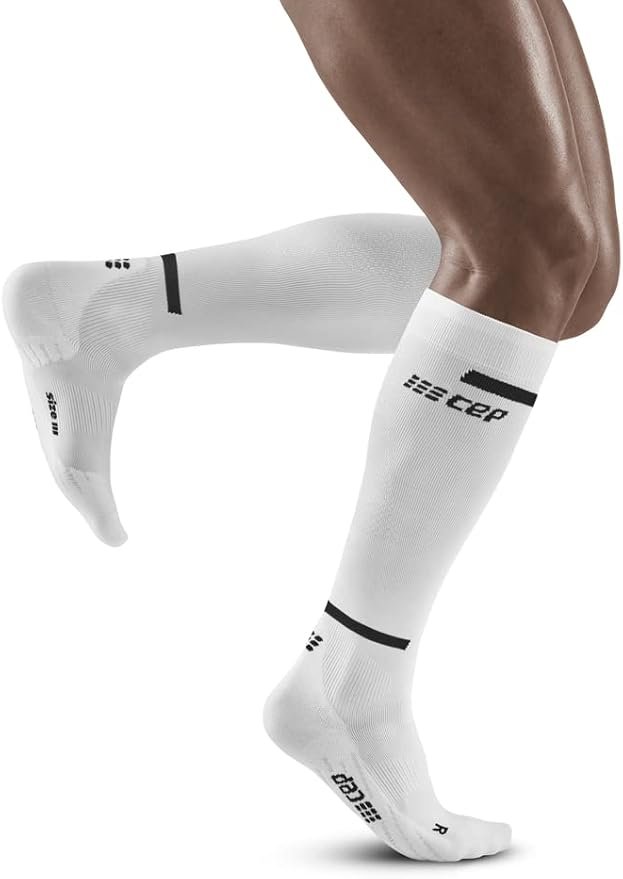
CEP Run Compression Socks 3.0
CEP is the gold standard in athletic compression. Made in Germany to medical-grade standards, their socks deliver precise 20-30 mmHg compression that actually holds its pressure over time — unlike cheaper socks that lose elasticity within weeks. The anatomical fit and moisture-wicking fabric make them genuinely comfortable for full training sessions, not just passive recovery wear.
#2 — Physix Gear Compression Socks
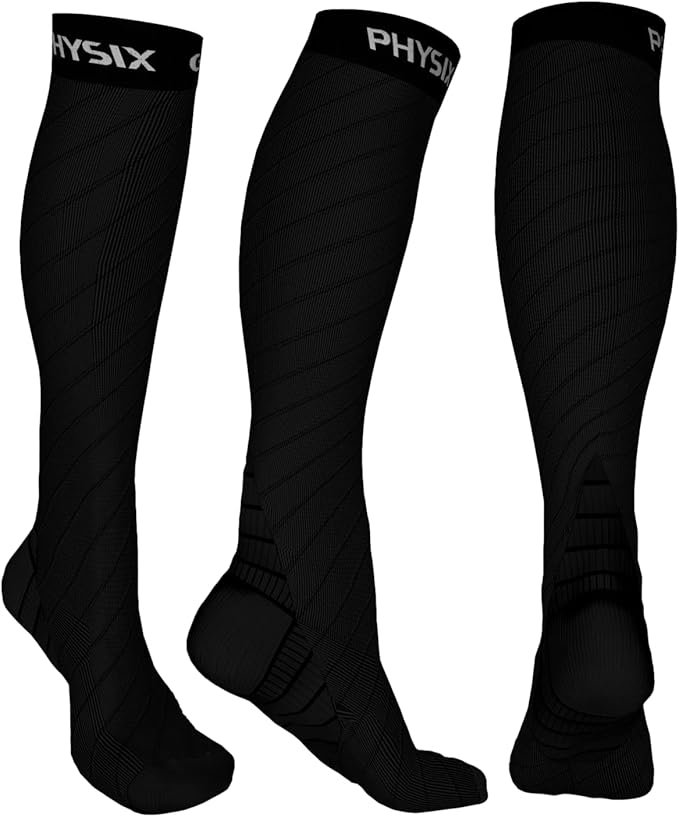
Physix Gear Sport Compression Socks
The best budget compression sock that doesn't feel like a budget compression sock. Physix Gear delivers consistent 20-30 mmHg compression at a quarter of the CEP price point. They're not as precisely calibrated or as durable, but for most people using them for post-workout recovery and travel, they get the job done convincingly. One of the highest-rated compression socks on Amazon for good reason.
#3 — Feetures Graduated Compression Socks
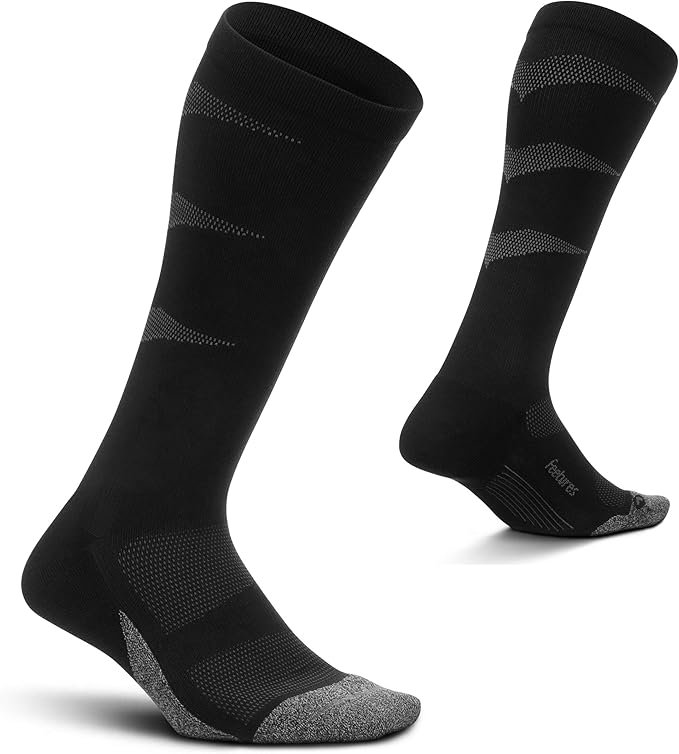
Feetures Graduated Compression Socks
Feetures sits between CEP and Physix Gear on price and performance. What sets them apart is the anatomical left/right specific construction and the seamless toe — details that matter when you're wearing them for 8+ hours post-race or on long flights. The iWick fiber technology keeps feet genuinely dry. If you find CEP too expensive but want more than a basic sock, this is the move.
What the mmHg Rating Actually Means
mmHg stands for millimeters of mercury — it's the unit used to measure compression pressure, the same scale used for blood pressure readings. The higher the number, the more pressure the sock applies to your lower leg.
8–15 mmHg is light compression — over-the-counter travel socks and basic support. Fine for preventing swelling on long flights but minimal athletic benefit.
15–20 mmHg is moderate compression — the minimum threshold where you start to see meaningful recovery benefit. Good for all-day wear, mild swelling, and moderate training loads.
20–30 mmHg is firm compression — the sweet spot for athletic recovery. This is what CEP and Physix Gear deliver and where most of the research showing recovery benefits has been conducted.
30–40 mmHg is medical-grade compression — typically prescribed for conditions like DVT or chronic venous insufficiency. Not appropriate for general athletic use without medical guidance.
Graduated vs. uniform compression matters too. Graduated means the compression is tightest at the ankle and gradually decreases up the leg — this is what drives blood back toward the heart. Uniform compression (same pressure throughout) is less effective for recovery. All three socks on this list use graduated compression.
Sizing is critical. A compression sock that's too large delivers no compression benefit. Measure your calf circumference and shoe size and follow the manufacturer's chart precisely. When between sizes, go smaller.
SimpleRecoveryGuide.com is a participant in the Amazon Services LLC Associates Program. We earn a small commission on purchases made through our links at no extra cost to you. Our rankings are based on product merit — affiliate relationships never influence our recommendations.